The Named Body: How Contemporary Nude Photography Is Rewriting the Terms of Visibility
There is a long tradition in Western visual art of treating the nude human form as a kind of raw material—something to be shaped by the artist's vision into an expression of beauty, desire, spiritual aspiration, or formal perfection. Within this tradition, the individual whose body appears in the work is largely beside the point. What matters is the form, not the person inhabiting it. The subject gazes away, or downward, or is lit in ways that obscure facial features. They are present as body and absent as self.
Contemporary fine art nude photography is, in a meaningful segment of its current practice, refusing this arrangement.
The Historical Weight of Anonymity
To understand why the turn toward named, identified subjects represents a genuine artistic and ethical shift, it is necessary to reckon honestly with what anonymity has historically meant in nude representation. The convention of the faceless or averted nude was not simply an aesthetic choice. It was, and in many contexts remains, a mechanism of power—one that allowed viewers to project onto bodies without the complicating presence of the person those bodies belonged to.
This dynamic has carried particular weight in the representation of women, whose bodies have constituted the overwhelming majority of nude subjects across Western art history. The woman who posed for a painting, a sculpture, or later a photograph was frequently rendered invisible as a person precisely so that she could be more fully present as an object of contemplation. Her name, her circumstances, her interiority—these were not considered part of the artistic transaction.
The photographers now working against this tradition are not simply making a stylistic choice. They are making an argument about what fine art nude photography is allowed to say and who it is allowed to center.
The Face as Artistic Statement
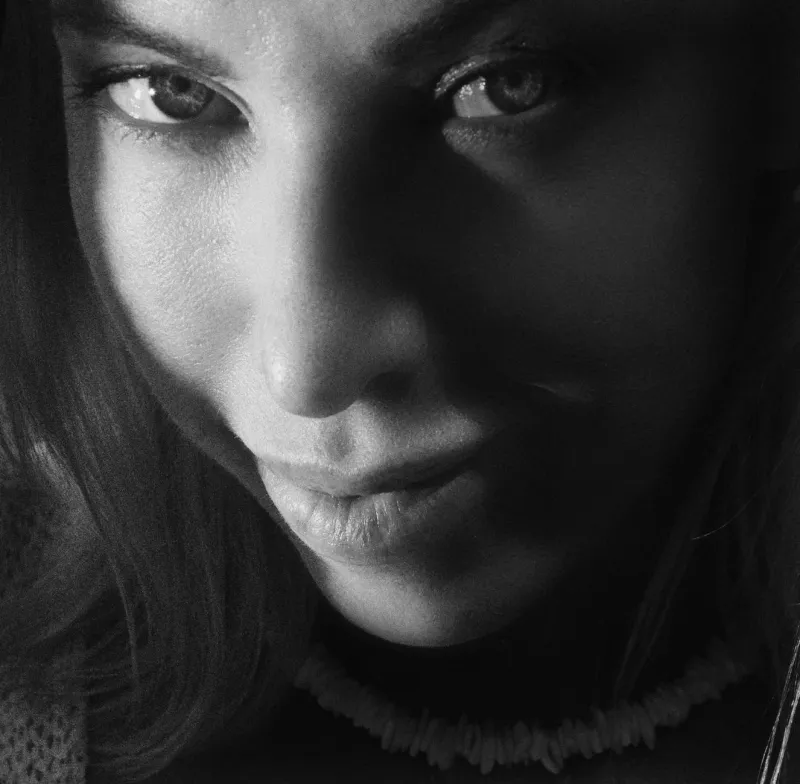
In the work of a growing number of American photographers, the decision to include the subject's face—fully, directly, unobscured—functions as a formal declaration. The gaze returned to the camera, when it appears in a fine art nude photograph, changes the entire relational structure of the image. The viewer is no longer permitted the comfortable distance of the observer; they are instead encountered by the observed.
This is not always comfortable, and that discomfort is frequently intentional. When a nude subject meets the camera's lens with direct, composed attention, the viewer must confront their own position in relation to the image. What does it mean to look at this person? What assumptions did I bring to this viewing that the subject's gaze has now made legible to me?
The finest examples of this approach do not merely document a body; they present an encounter between two fully realized people—the photographer and the subject—into which the viewer is invited as a third party with responsibilities.
Narrative and the Whole Person
Beyond the inclusion of the face, a parallel development in contemporary nude photography involves the integration of biographical or narrative context into the work itself. Some photographers work in extended series that develop a subject's story across multiple images and accompanying text. Others present their subjects' own words alongside the photographs, allowing the person photographed to speak directly to the viewer about their experience of being seen, of choosing visibility, of what the work means to them.
This practice fundamentally alters the viewer's relationship to the image. A nude photograph accompanied by a subject's reflection on their own body—its history, its significance to them, the experience of choosing to be photographed—is an entirely different artistic object than a technically identical image presented without that context. The body in the frame is no longer a surface; it is a location where a specific life has been lived.
For collectors and viewers accustomed to the traditional anonymous nude, this shift can require adjustment. The work asks more of its audience. It does not permit the easy pleasures of pure formal appreciation without also requiring engagement with the person whose form is being appreciated.
Questions of Agency and Consent
The move toward named, narratively present subjects in fine art nude photography is inseparable from broader cultural conversations about consent, representation, and who controls the terms of visibility. These conversations have been particularly active in the United States over the past decade, shaped by movements that have foregrounded the experiences of people whose bodies have historically been subject to representation without meaningful agency.
The photographers most seriously engaged with these questions tend to involve their subjects as genuine collaborators rather than participants. The subject's input shapes not only the practical terms of the session but the conceptual framing of the resulting work—what story is being told, how it will be presented, and under what circumstances the images will be shared. Some photographers share editorial control with their subjects, allowing them to review and reject images before any public presentation.
This is not a universal practice, and it is worth noting that the art world's engagement with questions of consent in nude photography remains uneven. But the direction of serious contemporary practice increasingly points toward collaboration as the standard rather than the exception.
What This Means for the Viewer
For those who engage with fine art nude photography as collectors, enthusiasts, or thoughtful viewers, the named body presents an invitation and a challenge. The invitation is to a richer, more complete experience of the work—one in which the human dimension of the image is fully present rather than strategically suppressed. The challenge is to meet that fullness honestly, to resist the impulse to reduce the subject to form even when the form is beautiful.
The finest contemporary nude photography in this mode does not sacrifice aesthetic achievement to make its ethical point. The work is formally accomplished precisely because the artist's genuine engagement with the whole person of the subject produces images of greater depth and complexity than anonymity allows. When you know who you are looking at—when the photograph insists on that knowledge—you look differently. You look more carefully. You look, perhaps, more honestly.
That is a meaningful artistic achievement. And it is one that the tradition of fine art nude photography is, slowly and unevenly but genuinely, learning to claim.