Reclaiming the Frame: How Serious Photographers Are Restoring Dignity to the Nude Art Form
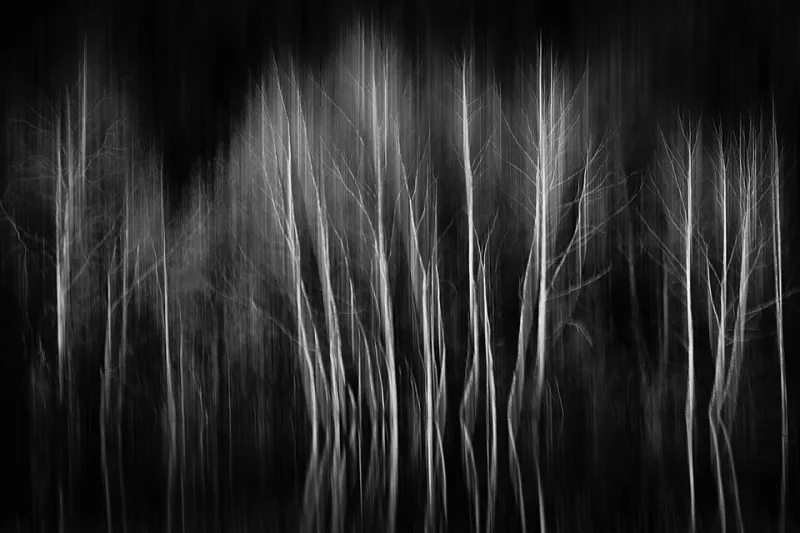
Photo: Martin Vorel.com, CC BY-SA 4.0, via Wikimedia Commons
For most of the twentieth century, the nude in photography occupied an uneasy position—celebrated in gallery retrospectives devoted to Edward Weston or Imogen Cunningham, yet perpetually shadowed by questions of intent and context. The internet did not resolve that tension. In many respects, it deepened it. The unprecedented democratization of image-sharing platforms flooded the visual landscape with content that, whatever its merit, made it increasingly difficult for serious practitioners to distinguish their work from the broader digital noise.
Yet something notable has been happening over the past several years. Collectors, curators, and institutions across the United States are turning fresh attention toward contemporary photographers who approach the nude with the same rigor, conceptual seriousness, and technical discipline that one would expect of any significant fine art practice. The genre, it seems, is undergoing a quiet but meaningful restoration.
The Problem with Algorithmic Culture
To understand why this renaissance matters, it helps to understand what preceded it. The rise of social media and content aggregation platforms in the 2000s and 2010s created an environment in which images were valued primarily for their capacity to generate immediate engagement. Nuance, tonal complexity, and compositual restraint—the very qualities that define serious nude photography—are not easily legible at thumbnail scale or in a two-second scroll.
The consequences for the genre were significant. Fine art photographers working with nude subjects found their work lumped into broad content categories that bore little resemblance to the deliberate, often months-long process behind a single exhibition print. Galleries grew cautious. Some institutions quietly removed nude photography from their acquisition lists, wary of association with a visual category that had become, in the popular imagination, synonymous with internet content.
"The conflation was damaging and, frankly, absurd," says one New York-based photographer who has exhibited at major American institutions and whose limited-edition prints now command serious prices at auction. "We're talking about a tradition that runs from Weston to Mapplethorpe to Sally Mann. The idea that this work belongs in the same conversation as what an algorithm serves up at midnight is a category error of the highest order."
What Distinguishes Gallery-Worthy Work
The photographers who have continued—and in some cases thrived—during this period share several qualities that set their practice apart from the broader visual landscape.
First, there is the matter of intention. Fine art nude photography begins not with a camera but with a conceptual framework. The photographer arrives at a shoot having considered the light, the location, the psychological dynamic between subject and lens, and the specific emotional or philosophical territory the work intends to explore. This preparatory depth is evident in the resulting images in ways that are immediately apparent to a trained eye, even if they resist easy articulation.
Second, there is technical mastery. The photographers gaining institutional recognition in this space are, without exception, accomplished craftspeople. They understand how to use natural light in ways that echo the chiaroscuro traditions of Renaissance painting. They print their own work, or work closely with master printers, to achieve the precise tonal gradations that give a fine print its presence on a gallery wall. Many work in large format, or with medium-format digital systems that deliver the resolution and tonal depth that exhibition-scale printing demands.
Third—and perhaps most critically—there is curatorial self-discipline. The photographers building serious reputations in this space release very little work publicly. They edit ruthlessly. Where a content creator might post dozens of images from a single session, a fine art photographer might exhibit one.
Institutional Recognition and the Collector Market
The evidence that something has shifted in how institutions regard this work is increasingly concrete. Several American photography galleries that had stepped back from the nude as a subject in the early 2010s have returned to it with notable seriousness. Auction results for twentieth-century nude photography masters have remained robust, and younger collectors—particularly those in their thirties and forties who grew up alongside the internet and are, perhaps, most acutely aware of the distinction between digital noise and genuine art—have shown strong appetite for contemporary work in the genre.
"There's a generation of collectors who understand, almost viscerally, the difference between an image made with real intention and one that exists simply because it can," notes a Los Angeles-based gallerist who specializes in photography and has recently expanded her program to include several contemporary nude photographers. "They've grown up in the oversaturated environment. They're hungry for something that required genuine thought and skill."
At the institutional level, major American museums have continued to acquire and exhibit nude photography as part of their permanent collections, making clear that the form's place in the canon of fine art photography is not in question. What has changed is the degree of public and critical attention being paid to contemporary practitioners working in this tradition.
The Role of Platforms Like David Nudes
Within this broader cultural moment, curated platforms dedicated specifically to fine art nude photography serve a function that is both practical and symbolic. They create a context in which serious work can be encountered on its own terms—separated from the algorithmic noise, presented with the care and intentionality that the work demands.
For photographers, such platforms offer something that has become genuinely rare: an audience that arrives with appropriate expectations. For viewers and collectors, they provide a reliable editorial filter, a guarantee that what they are seeing has been evaluated against standards that prioritize craft, concept, and artistic integrity.
This curatorial function is not incidental. It is, in many ways, the central act that makes a renaissance possible. Without contexts in which serious work can be seriously encountered, even the most accomplished photography risks being lost in the broader visual flood.
Looking Forward
The photographers at the forefront of this renewed attention to fine art nude photography are, by and large, not interested in making grand statements about the internet or algorithmic culture. They are interested in making compelling images. That focus—on the work itself, on the discipline of the craft, on the inexhaustible complexity of the human form as a subject—is precisely what gives their practice its staying power.
The nude in photography has survived every previous moment of cultural anxiety about its legitimacy. It survived the Comstock laws. It survived the culture wars of the 1980s and 1990s. It will survive the internet. The question, as always, is not whether the genre endures but who is doing the most serious and lasting work within it—and whether the institutions and audiences that matter are paying sufficient attention.
The current evidence suggests that they are.